SUPPORT YOUR LOCAL ARTHOUSE (AND FILM CRITICS)

BOFCApic

While you can usually find us holed up in the trenches of the press row, we do like to come out and support the local film scene here in Boston. In a joint effort with the Boston Society of Film Critics, we will help introduce a number of the films in The Brattle Theatre’s (Some of) The Best of 2012 series. Check out what you might have missed last year or come again for a favorite. You’re also more than welcome to come and say hello.

These are the confirmed screenings with introductions by BOFCA members:

Fri, Feb 1              BEASTS OF THE SOUTHERN WILD at 7:30 pm by Greg Vellante

Fri, Feb 1              MOONRISE KINGDOM at 9:30 pm by Greg Vellante

Sat, Feb 2            THE AVENGERS at 6:30 pm by Bob Chipman

Sat, Feb 2            THE DARK KNIGHT RISES at 9:15 pm by Dan Kimmel

Sun, Feb 3           WAKE IN FRIGHT at 7:00 pm by Brett Michel

Sun, Feb 3           DAISIES at 9:30 pm by Brett Michel

Mon, Feb 4           THIS IS NOT A FILM at 7:30 pm by Norm Schrager

Mon, Feb 4           AI WEIWEI: NEVER SORRY at 9:15 pm by Monica Castillo

Wed, Feb 6          THE DAY HE ARRIVES at 7:15 pm by Brett Michel

Wed, Feb 6          OSLO, AUGUST 31st at  9:00 pm by Brett Michel

Thu, Feb 7            LOOPER  at 7:00 pm by Evan Crean

Fri, Feb 8              THE RAID: REDEMPTION at 9:30 pm by Steve Head & John Black

Sat, Feb 9            HOLY MOTORS at 7:30 pm by Monica Castillo

Sat, Feb 9            COSMOPOLIS at 9:45 pm by Sean Burns

The full schedule of the (Some of) The Best of 2012 series can be found on the Brattle’s site. You can purchase tickets in advance on their website or help support their Kickstarter to help buy digital equipment for the theater. Hope to see you out there supporting independent cinema!

-Monica Castillo

BOFCA REPERTORY PICK: 11/30

by Jake Mulligan

You can’t be blamed if you missed THIS IS NOT A FILM during its first trip through Boston theaters. Playing on a small screen at the Kendall Theatre for 7 days, the picture brought in miniscule grosses. No doubt, it had support – critics raved. I don’t normally put stock in this type of thing, but a 100% approval rating at RottenTomatoes.com is nothing to scoff at. Still, there’s something alarming on that Rotten Tomatoes page. Jafar Panahi’s effort is listed as a documentary. Go to Imdb.com, and you’ll see the same. Peruse the reviews – Andrew O’Hehir calls it a “video essay,” Christy Lemire, a “documentary,” A.O. Scott, a “masterpiece in a form that does not yet exist.”

The fact that THIS IS NOT A FILM is a stunning cinematic achievement seems to go without saying. I believe that it may be the best film I’ve seen thus far this year (irony notwithstanding,) and I’m surely not the only one. But what no one seems to agree on is what this 75-minute experience actually is. An essay? A documentary? A diary? Something else? All worthy interpretations, but they all reduce what Panahi has done. He’s made a narrative film, pure and simple; the exact thing the Iranian regime had suppressed him from making in the first place.

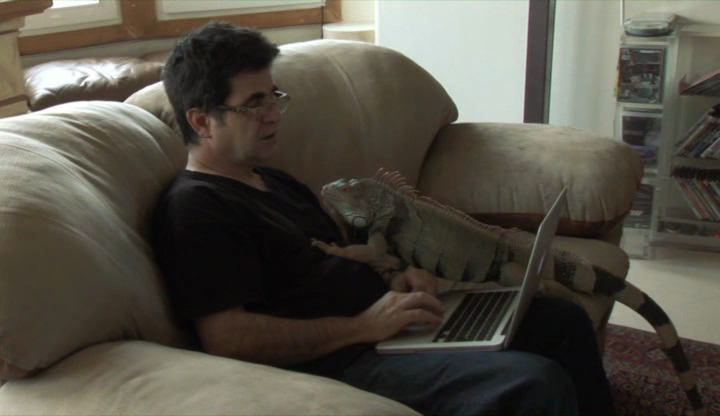
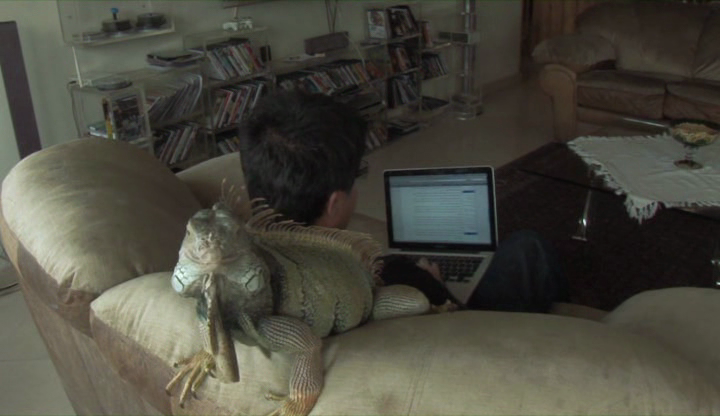
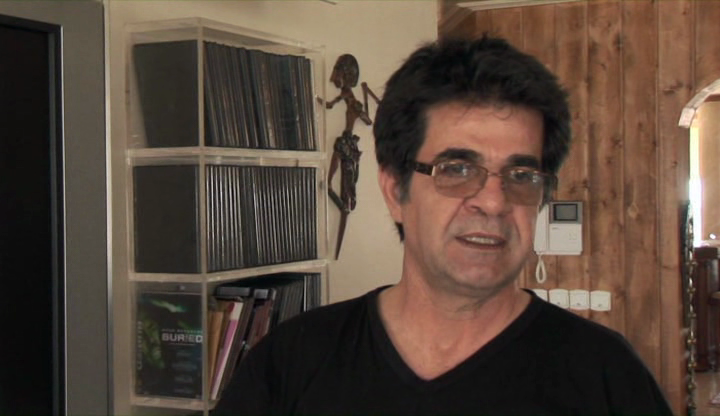
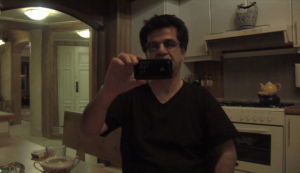
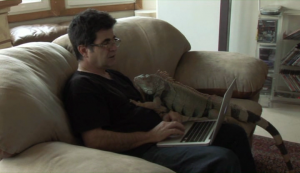
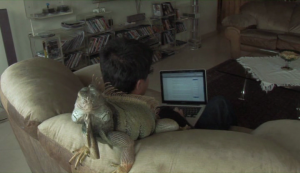
The big secret is, on the surface, this isn’t a grand political rebellion. It’s a simple story about a man, Panahi, trying whatever he can to transcend his house arrest – the Iranian government jailed him for years due to the color of a Beret he wore at a film festival in Montreal – to make a film. When we start, he’s bored; feeding his daughter’s iguana, eating breakfast, making a call to a fellow director who’s been wanting to “film filmmakers when they aren’t making films.” Panahi is a passive subject – walking longingly past the cameras his family has set up, seemingly independent of his own interests.
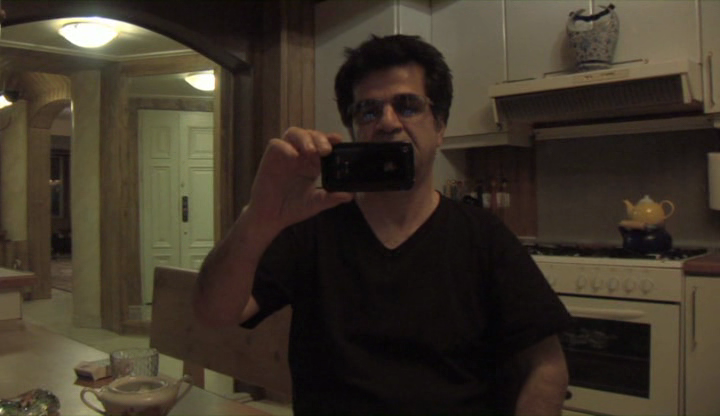
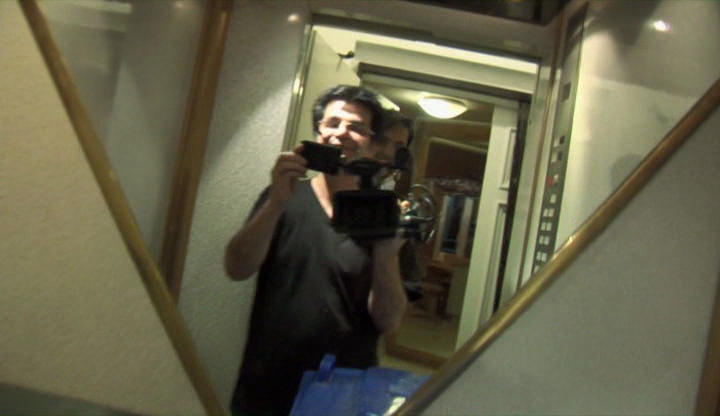
Eventually his partner shows up with a professional grade camera. Panahi shows clips and critiques his past films, all of which blur the lines between documenting reality and presenting narrative fiction. He shows videos of prospective sets and begins to act out the script of a film he failed to produce. He starts to walk around the house, filming his own plight (and the fireworks outside, celebrating the Persian New Year,) with an iPhone. None of it satisfies him. It’s only when co-director Mohjtaba Mirtamasb leaves, and Panahi fatefully picks up his camera to turn it on someone else, that he begins to find the beauty in the form again.

At first he’s talking about himself; questioning his ‘subject’ – a trash collector – about what he saw the night the police came to arrest him. By the end of the conversation, Panahi just wants to study the man himself. Once again, he’s capturing daily life in Iran – as a director, and no longer a subject. And with the return to that artistic urge, the film (that is not a film) comes to an end. Forget the idea of a documentary. This is a soul-baring, autobiographical narrative film – an even more impressive prospect. This is the introspective cinema men like Jean-Luc Godard and Dziga Vertov dreamed of.
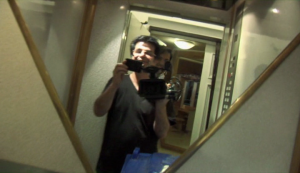
Because when you inspect the filmmaking itself, things get interesting. Certain scenes that cut back and forth between multiple perspectives (a cut from Panahi on his phone, to a shot of the iguana passing by, back to Panahi staring at the iguana, for example) would technically be impossible to capture ‘honestly,’ considering the amount of cameras (one) we know the team has. Most of the interactions with other characters occur offscreen; and could be easily dubbed. The garbage man Panahi speaks to at the conclusion just happens to be a University student with a vested interest in cinema, and he just happens to have also been at the apartment complex the same night Panahi was seized and arrested.

I can’t pretend to speak definitively, but all the evidence points to the fact that this is as scripted and pre-arranged as any of Panahi’s other films, if not more so (Mirtamasb has admitted, at the least, that this ‘day-in-the-life’ was filmed over more than a few days.) Yes, the craft suggests it, but that’s not all. The narrative progression is too tight, the subtext too intricate, for me to believe this is all off-the-cuff. No, it’s a masterful act of rebellion; cinema as a stealth enterprise; a traditional narrative film by a man banned from making them; fiction that you’re tricked into accepting for reality.
And as for the result, you can cut it up and analyze it one hundred different ways. Panahi, iPhone in hand, could be studying the nature of how picture quality and visual format dictates cinema. Perhaps he’s interested in whether his docu-drama will be accepted as truth or fiction. He could simply be trying to create a document of his life, from his overarching prison sentences, to his pets, down to the people he crosses path with in his apartment complex. He might even see NOT A FILM as a thematic re-telling of the script that got him investigated, which also (allegedly) focused on one girl locked indefinitely in her home; persecuted by a society that seeks to silence her. Hell, he might even just see the picture as just another work in his oeuvre; inquiring, as pictures like CIRCLE and OFFSIDE have, into the nature of Iranian society and the possibility of a humanistic cinema, and how the former tends to discourage the latter.

Or perhaps, he sees it as I do: as the definitive work of modern Iranian filmmaking, gleefully skirting the line between reality and art, between fiction and non-fiction, between what’s permissible and what will earn you a 20 year jail sentence. All of his countryman’s cinema bristles with the aftereffects of censorship and Orwellian working conditions. Here, the struggle between filmmaker and regime is not in the background, in the subtext, or relegated to academic studies of the film. It’s literally the narrative. It’s the text. It is his primary passion – the film is even dedicated to Iranian filmmakers; with blank spaces left in the special thanks column where their names should be.
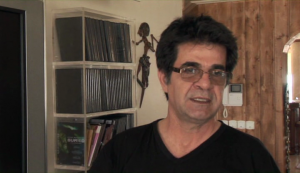
Panahi doesn’t tell you how to think about Iran, and his place in it. He simply depicts it as it is, as he can afford to, without implicating anyone further. That is to say: from his apartment complex, and often speaking in a form of code (he may not complain about his situation directly, per se, but a prominently framed illegal DVD copy of the Ryan Reynolds feature BURIED articulates his situation well enough.) There’s a mysterious and ambiguous edge hanging over his actions, right up until the haunting final frames. THIS IS NOT A FILM? I disagree. This is a Film By Jafar Panahi, as much as any other. Not only that, it’s his masterpiece.

THIS IS NOT A FILM plays tomorrow 11/30, and Sunday, 12/2, at 7PM. The Harvard Film Archive, 24 Quincy Street Cambridge, MA 02138. The HFA is playing the entirety of Panahi’s oeuvre over the weekend in their series JAFAR PANAHI: THIS IS NOT A RETROSPECTIVE

BOFCA REPERTORY PICK: 10/23

Everything old is new again.

Paul Thomas Anderson’s latest film, THE MASTER – which resurrected 70mm film and the career of Joaquin Phoenix in one masterful swoop – confirmed his position yet again as one of our country’s greatest artists. He’s chronicling our history, using his work to look at the growth of both our culture and our cinema. THE MASTER also confirmed, for better or worse, that he can’t help but make the same film over and over again. BOOGIE NIGHTS, MAGNOLIA, HARD EIGHT – all about troubled, oft-impulsive young men, driven to find love in makeshift families; looking to replace the lack of passion they found in their own (they reach varying degrees of success.) His 4th feature, PUNCH-DRUNK LOVE, fits directly into this category.

Adam Sandler, his star, also seemed disinterested in breaking out of his formula (as of this film’s 2002 release, at least.) HAPPY GILMORE, BILLY MADISON, BIG DADDY, ANGER MANAGEMENT, it’s all the same shit: an angry, violent man-child with an odd task-at-hand (becoming a pro golfer, raising a kid, going through elementary school again; it’s all interchangeable,) falls for an ethereal blonde beauty, uses his newfound strength to conquer a barely-characterized comic villain (Shooter McGavin was always my favorite, for whatever it’s worth,) and eventually, at long last, finds peace through love.

The brilliance of their sole collaboration isn’t in how it breaks away from these formulas. It’s what it does with them. That’s what’s so beautiful about PUNCH-DRUNK. You’ve seen this all before, far too many times. You’ve just never seen it quite like this.

Because surely, as Barry Egan, Sandler fulfills his usual clichés: his violent temper is established early, he’s emotionally stunted, he’s tormented by a cartoonish villain (Phillip Seymour Hoffmann, transcendently infuriated, as the manager of a Midwestern phone-sex line/mattress outlet,) he’s obsessively pursuing a wacky hobby (an endless collection of cheap pudding, to be traded for unlimited frequent flyer miles,) and he happens upon the women (Emily Watson) who – with a kiss right out of a fairy tale – can imbue a sense of meaning into all these ailments.

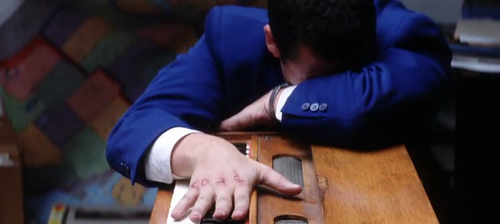
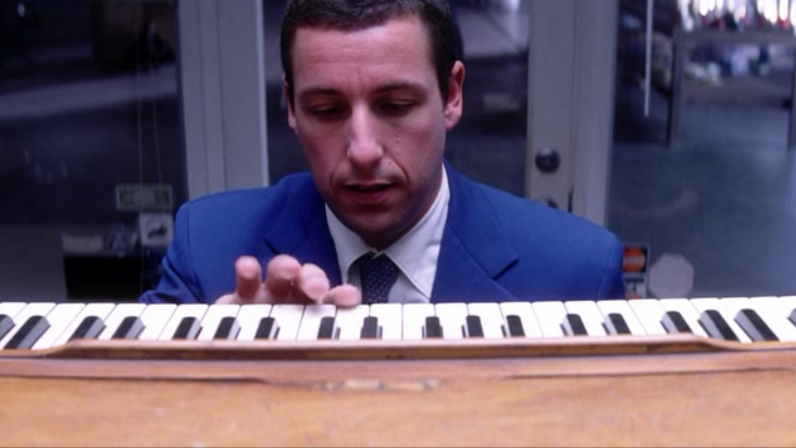
And Anderson, behind the camera, brings everything we’d come to expect of him: an eclectic, mood-defining soundtrack, vibrant set design/color palette, and extensive film references (Egan rocks Jean-Paul Belmondo’s blue suit from A WOMAN IS A WOMAN; after one violent outbreak cuts on his knuckles form the word ‘LOVE’, recalling another famous fist from NIGHT OF THE HUNTER.) It’s all tied together by smooth tracking camerawork, courtesy top-class cinematographer Robert Elswit, which recalls the late-period films of Stanley Kubrick and Max Ophüls.

But PTA also brings something else along, something that’s been sorely (and obviously) missing from all of Sandler’s films. The film has a heart, a soul, and a sense of specificity. He blends interludes of abstract visual art (courtesy the late Jeremy Blake) into the feature, edits it to the beat of a hauntingly erratic score (it feels like a warm-up for the instant-classic scores he’d commission from Johnny Greenwood for THE MASTER and THERE WILL BE BLOOD,) and allows it to operate from a dream-logic almost entirely divorced from our own reality. When Egan sprints to Watson’s apartment, he awkwardly carries along with him the harmonium he discovered (stole?) the morning he met her. What should seem strange, pretentious, and distancing instead feels, for lack of a better term, completely and totally right.

A surrealistic experience, equal parts comforting fantasy and anxiety-driven nightmare, PUNCH-DRUNK transcends its many predecessors with a deceptively simple flourish: it values feelings over mechanics. Its hallucinatory construction never feels the need to adhere to anything other than its own mood. It’s a stunningly beautiful film; cutting past your brain to play directly to your heart. Some love stories are epic, some are sweepingly romantic, but Anderson’s feels nothing less than primal.

His early work mainly recalled Scorsese and Altman, and his last two films Kubrick, but PUNCH-DRUNK is Anderson’s anomaly – a truly singular effort. As a film critic, it’s easy to start thinking you’ve seen it all. And there’s nothing better than being proven wrong. – Jake Mulligan

PUNCH-DRUNK LOVE plays today, 10/23, at 5:30, 7:30, and 9:30. The Brattle Theatre, 40 Brattle Street, Cambridge MA, 02138

BOFCA REPERTORY PICK: 8/8

I’m in love with this combination of coming-of-age stories. Not only do they feature strong female leads coming to terms with their sexuality, but both of the films showing at the Brattle Theatre today are directed by women. It’s a rare empowerment on both sides of the camera.

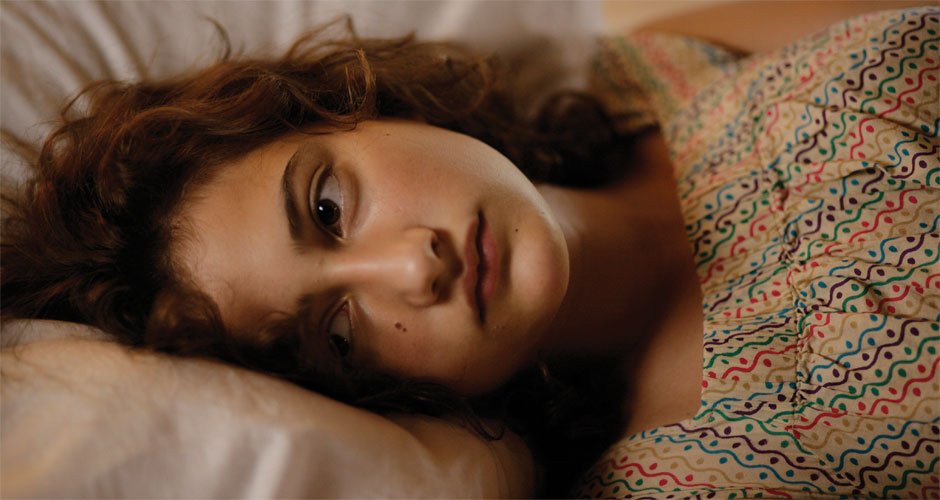
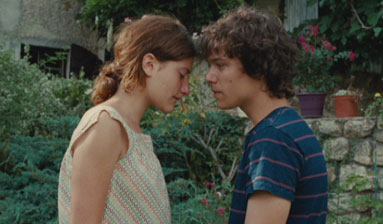
GOODBYE FIRST LOVE is the more romantic of the two, following the trajectory of one’s first relationship, its passions, and the eventual heartbreak that follows. Camille is a reserved 15-year-old who falls in love with a goofy boy in class who dreams of traveling the world. Well, he sets off to to do so, leaving Camille behind in France with a broken heart. That first feeling of heartbreak is perfectly captured in a single scene: Camille looks devastated lying on the couch, so her mother asks if she’s okay. She responds, “I want to die.” It’s just the right amount of teenage melodrama, and as adults watching, we can both laugh at the naivety yet sympathize with her plight. Chances are, the same end-of-the-world feeling hit us at right about that age.

The movie continues to follow Camille as she moves on with her life. Her character is far from perfect and makes other romance-related missteps. Nonetheless she carries on, pursuing her interest in architecture and living away from the comforts of family. But no matter how independent and mature she becomes, she always remembers her first love. Don’t we all?

Not only is the premise relatable, but it’s beautifully composed in a nostalgic rose-tinted tone. Director Mia Hansen-Løve thoughtfully inserts shades of blue, red, and white (the colors of the French flag) throughout the movie. The colors are subtly incorporated, making the blue-tinted cityscape appear bleaker now that her love has left and the French countryside feel warmer when he vacations with her. Actress Lola Crèton plays Camille with incredible depth, especially impressive since her character is not the type to fly off the handle. Even when she suffers silently, it is more than apparent to the viewer. We cheer for her to get over him, like a friend on the sidelines of a post-breakup mess. But we’re left as helpless as she is in the matter. How could you ever forget your first love?

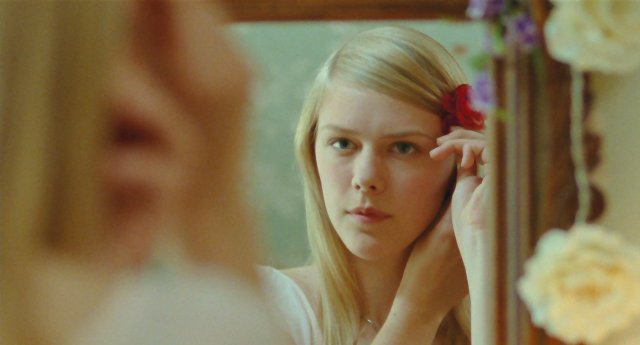
Following the French film about love is the Norwegian film about sex. Or at least, discovering the tricky situation of needing to hide one’s sexual urges. TURN ME ON, DAMMIT! follows 15-year-old Alma, a high school girl with a slight phone sex addiction and a very serious crush on a guy at school.

Well, word gets out that she has a sexual encounter with said boy, and all schoolyard hell breaks loose when he denies it ever happened. She’s ostracized and teased, with even the neighbor’s little girls calling her “Dick-Alma.” There’s a nice little subplot about escaping the remote village she lives in, but eventually she must deal with her high school scandal.

The spirit of TURN ME ON, DAMMIT! is much more rebellious than that of FIRST LOVE. Alma and her two friends ride the bus to school and flip off their town’s sign. The three girlfriends eventually erupt into a fight over the scandal; realistic in a movie about events getting blown out of proportion. Alma (Helene Bergsholm) has no reservations about saying what’s on her mind, and even goes so far as to profess her love for her crush out in the open (and of course, Mom isn’t thrilled when she finds the phone sex bills – but Alma takes it all with a surly scowl on her face.)

First-time director Jannicke Systad Jacobsen captures the social mess with a touch of absurdity. One of Alma’s friends has a prisoner pen pal. We watch some of Alma’s sexual fantasies, and eventually watch her get interrupted by her mother. It’s almost like a teen sex comedy for girls, set in a bleak (here, even the mountains look desaturated) trap of social isolation.

Although Alma is much more dissatisfied than Camille, both seek independence from their past mistakes. They both look towards a future in the city, the classic bastion of sin. They pursue who they like regardless of the romantic or social peril it may cause, and they’re allowed to explore sexuality in a way not often depicted in American films. These imported treats are a perfect double bill as part of the Brattle’s Recent Raves repertory series. – Monica Castillo

GOODBYE FIRST LOVE screens today, 8/8, at 3:15PM and 7:15PM. TURN ME ON, DAMMIT! plays at 5:30PM and 9:30PM. The Brattle Theatre, 40 Brattle Street, Cambridge MA. 02138.

BOFCA REPERTORY PICK: 7/31

Is there any director from cinema’s past 50 years as influential as Sergio Leone?

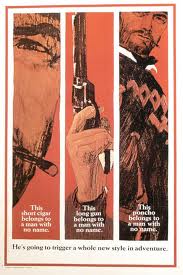
It’s impossible to even decide where to begin with the legacy he and his films have left behind. Of course, you could start with the incredibly prolific wave of 70’s Italian genre movies that followed in his wake; slasher films, cop films, supernatural thrillers, and the genre he godfathered – The Spaghetti Western. They are, almost without exception, derived from his wholly unique visual style. And his preference for ‘heroes’ who err on the side of violence and villainy.

Then there is the sheer iconography of his greatest images – from the climactic duel in THE GOOD, THE BAD, AND THE UGLY and De Niro staring blankly into the end of ONCE UPON A TIME IN AMERICA, to his oft-used favorites like sweat-dripping close-ups crosscut with desolate long shots, or the use of the entire Cinemascope frame to photograph nothing more than a man’s eyes. This is to say nothing about the fact that he created one of cinema’s defining antiheroes (if not one of its first) in Clint Eastwood’s Man With No Name, a bounty killer who murdered without hesitation for money and spouted enough one-liners for us to like him while he did it.

We’ve seen a few of these characters since then.

And perhaps most importantly, there is the innumerable amount of modern filmmakers who count him among their influences – and none too subtly. And that list ranges from his spiritual son Quentin Tarantino to master filmmakers like Martin Scorsese to upstart youths like Edgar Wright (SHAUN OF THE DEAD.) So, to put it bluntly, imagining the landscape of modern film without the language and influence of Sergio Leone to guide it is a bit like trying to imagine what the NBA would be like without Michael Jordan.
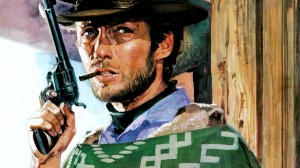
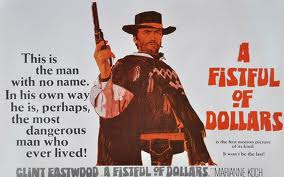
And with A FISTFUL OF DOLLARS, playing twice today at the Brattle Theatre, you get to see Leone become Leone, as we know him. Ennio Morricone’s musical compositions are as integral to his style as any of his visual flourishes, and the pairing of his music against Leone’s ruthlessly violent images – like Clint Eastwood’s boot stomping into the picture, framed as large as his enemies entire bodies, ready to do battle – is like cinematic love at first sight.

And while opening scenes feel a bit craftsman-like (Leone had worked behind the camera on sword-and-sandals epics) by the film’s climax, his eye has matured enough to capture the shockingly powerful frames of conflict and contrast that have captivated viewers so vehemently for decades.

So let’s get the elephant out of the room. Yes, FISTFUL is a direct remake of Akira Kurosawa’s samurai masterpiece YOJIMBO, yes, much of it is recreated shot-for-shot, and yes, YOJIMBO is probably the better film if you deconstruct the two. And certainly, everything Leone is doing is taken from the playbook of American westerns – say, the Catholic iconography and stark battles between good and evil from Ford, and the slightly-surreal framing from Samuel Fuller’s Cinemascope masterpiece FORTY GUNS (which does, indeed, pioneer the eyeballs-close-up Sergio is always granted credit for.)

But Leone makes the movie his own, his signature is undeniable – and it’s those changes and images that would come to define the artist as we know him.

The sense of self-awareness that penetrates throughout all the operatic posturing, making every single second a joy to watch. The sense of deconstructing his chosen genre, the western, then building it back up with nothing more than it’s most essential moments – a hero emerges, a villain conquers, a gunfight – stretched out to unbearably tense lengths. And those beautiful, magnificent zooms – everything that we now know as simply Leone is present here. So, behind the “it’s a remake!” complaints is one of the greatest instances of a filmmaker finding the precise voice he would use to tell stories for the rest of his career.

Like Kubrick with 2001 or Godard with BREATHLESS, it lays out the aesthetic style (both in his visuals and in Morricone’s singular sounds) and thematic concerns that would drive him for the rest of his life with a startling clarity. It’s not just a movie, it’s an artistic mission statement. – Jake Mulligan

A FISTFUL OF DOLLARS screens today, 7/31, at 4:30PM and 9:30PM. THE STORY OF FILM, PARTS 7 + 8, play at 7:00PM. The Brattle Theatre, 40 Brattle Street, Cambridge MA. 02138.