BOFCA REPERTORY PICK: 8/8

I’m in love with this combination of coming-of-age stories. Not only do they feature strong female leads coming to terms with their sexuality, but both of the films showing at the Brattle Theatre today are directed by women. It’s a rare empowerment on both sides of the camera.

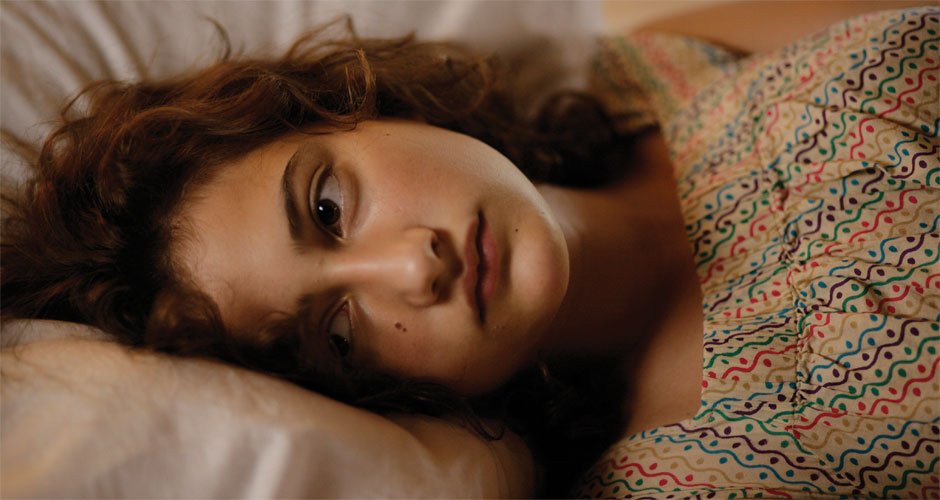
GOODBYE FIRST LOVE is the more romantic of the two, following the trajectory of one’s first relationship, its passions, and the eventual heartbreak that follows. Camille is a reserved 15-year-old who falls in love with a goofy boy in class who dreams of traveling the world. Well, he sets off to to do so, leaving Camille behind in France with a broken heart. That first feeling of heartbreak is perfectly captured in a single scene: Camille looks devastated lying on the couch, so her mother asks if she’s okay. She responds, “I want to die.” It’s just the right amount of teenage melodrama, and as adults watching, we can both laugh at the naivety yet sympathize with her plight. Chances are, the same end-of-the-world feeling hit us at right about that age.
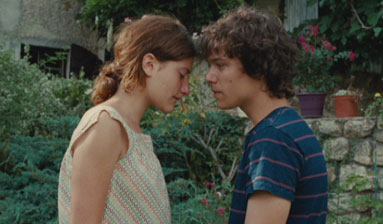
The movie continues to follow Camille as she moves on with her life. Her character is far from perfect and makes other romance-related missteps. Nonetheless she carries on, pursuing her interest in architecture and living away from the comforts of family. But no matter how independent and mature she becomes, she always remembers her first love. Don’t we all?

Not only is the premise relatable, but it’s beautifully composed in a nostalgic rose-tinted tone. Director Mia Hansen-Løve thoughtfully inserts shades of blue, red, and white (the colors of the French flag) throughout the movie. The colors are subtly incorporated, making the blue-tinted cityscape appear bleaker now that her love has left and the French countryside feel warmer when he vacations with her. Actress Lola Crèton plays Camille with incredible depth, especially impressive since her character is not the type to fly off the handle. Even when she suffers silently, it is more than apparent to the viewer. We cheer for her to get over him, like a friend on the sidelines of a post-breakup mess. But we’re left as helpless as she is in the matter. How could you ever forget your first love?
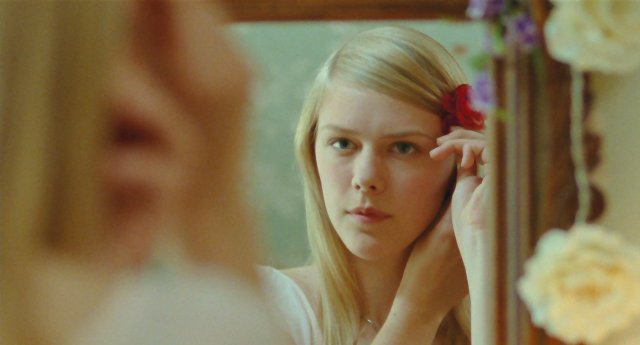
Following the French film about love is the Norwegian film about sex. Or at least, discovering the tricky situation of needing to hide one’s sexual urges. TURN ME ON, DAMMIT! follows 15-year-old Alma, a high school girl with a slight phone sex addiction and a very serious crush on a guy at school.

Well, word gets out that she has a sexual encounter with said boy, and all schoolyard hell breaks loose when he denies it ever happened. She’s ostracized and teased, with even the neighbor’s little girls calling her “Dick-Alma.” There’s a nice little subplot about escaping the remote village she lives in, but eventually she must deal with her high school scandal.

The spirit of TURN ME ON, DAMMIT! is much more rebellious than that of FIRST LOVE. Alma and her two friends ride the bus to school and flip off their town’s sign. The three girlfriends eventually erupt into a fight over the scandal; realistic in a movie about events getting blown out of proportion. Alma (Helene Bergsholm) has no reservations about saying what’s on her mind, and even goes so far as to profess her love for her crush out in the open (and of course, Mom isn’t thrilled when she finds the phone sex bills – but Alma takes it all with a surly scowl on her face.)

First-time director Jannicke Systad Jacobsen captures the social mess with a touch of absurdity. One of Alma’s friends has a prisoner pen pal. We watch some of Alma’s sexual fantasies, and eventually watch her get interrupted by her mother. It’s almost like a teen sex comedy for girls, set in a bleak (here, even the mountains look desaturated) trap of social isolation.

Although Alma is much more dissatisfied than Camille, both seek independence from their past mistakes. They both look towards a future in the city, the classic bastion of sin. They pursue who they like regardless of the romantic or social peril it may cause, and they’re allowed to explore sexuality in a way not often depicted in American films. These imported treats are a perfect double bill as part of the Brattle’s Recent Raves repertory series. – Monica Castillo

GOODBYE FIRST LOVE screens today, 8/8, at 3:15PM and 7:15PM. TURN ME ON, DAMMIT! plays at 5:30PM and 9:30PM. The Brattle Theatre, 40 Brattle Street, Cambridge MA. 02138.
BOFCA INTERVIEW: 8/6

Jesse Hassinger and Mark Anastasio are the programming coordinators at the Coolidge Corner Theatre, one of the Boston area’s premiere movie houses for both first-run and repertory releases. In addition to all the hottest indie fare (they have BEASTS OF THE SOUTHERN WILD, MOONRISE KINGDOM, and TO ROME WITH LOVE on their screens at the moment, among others,) they also program a number of exciting and innovative repertory series. The Science on Screen series pairs expert testimony and conversation with related films, the @fter Midnight series presents cult classics to rabid late night audiences, and the Big Screen Classics Series, screens on Monday nights at 7PM, brings canon classics to the big screen from pristine prints.

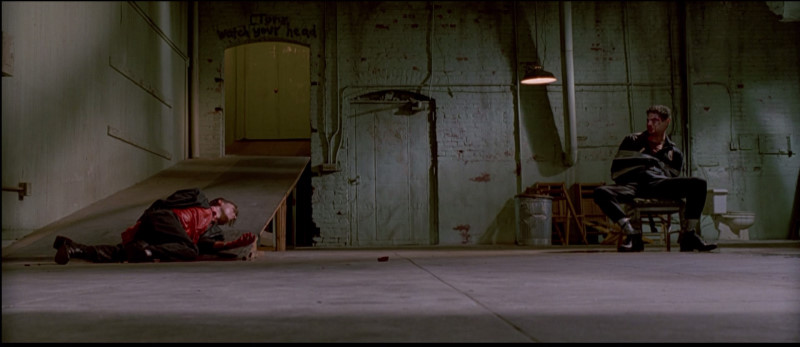
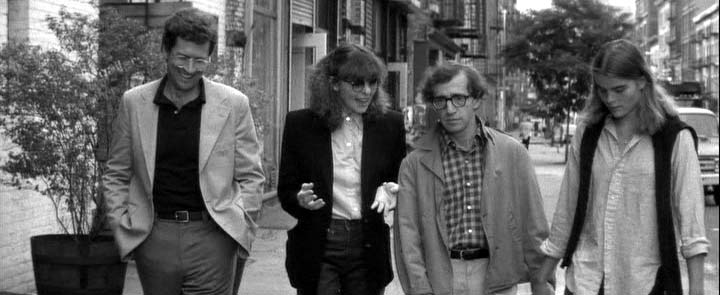
And that series is gearing up for one hell of a month. It all starts tonight with Woody Allen’s MANHATTAN, which is certainly his most beautiful film, if not simply his best. (for what it’s worth, it also makes a great double feature with last week’s screening selection, THE APARTMENT.) Coming up later in the month is THE BIG LEBOWSKI, THE WILD BUNCH, and RESERVOIR DOGS – certainly, there is no shortage of American classics at the Coolidge this summer, all in 35mm presentation no less.

BOFCA film reviewer Jake Mulligan spoke with the team about their dedication to film presentation, and about the new directions they hope to chart with their repertory programming. Be sure to check back later in the week for more with Mark and Jesse about their midnight series and other upcoming events.

Question: You’ve spoken before about how you won’t let the studios abandonment of 35mm stop you guys from exhibiting everything you can on film. I was hoping you could speak about how you hope to do that.

Jesse Hassinger: There are collectors and archives around that we have worked with in the past, for genre titles especially. For the midnight series it can be difficult to find prints of things – sometimes we’ve been able to book DVD rights through a studio, then we find a print through a collector so we can play it on film.

We have a handful of collector’s lists, and we go through those, and we keep abreast of new additions. And there are some great archives around the nation as well, ranging from the Academy of Motion Picture Arts and Sciences Archive in Los Angeles all the way down to University archives that have really interesting arrays of movies. There’s one in North Carolina that we work with, they have a very interesting set of genre films along with classic films – even some 70’s era Hollywood movies.

So if there ever comes a time when the studio will no longer make prints available, or will ditch their prints, or just not make any more, we have avenues to explore.

Question: You also seem to be making some changes to what gets programmed and when – a year ago I would’ve pegged PEE-WEE’S BIG ADVENTURE as more of a Midnight than a Big Screen Classic, but it’s certainly deserving of the latter title.

JH: That’s the whole thing, if you look at the Coolidge Institution and our programming right now. For the last year or two – three, maybe – we’ve been really trying to open our doors for a younger audience. We want to introduce people who are just coming to Boston for college to a great theater like us. We really are trying to get more of these interesting programming choices into our series. Like Ishiro Honda’s GODZILLA, BOOGIE NIGHTS, RESERVOIR DOGS, more 90’s fare.

Mark Anastasio: With a lot of these, the Big Screen Classics, it’s based on the quality of the filmmaker. That was the biggest decision behind BOOGIE NIGHTS – Paul Thomas Anderson, he’s my favorite American filmmaker, I think he’s fantastic. But for years, no one would check into this office when programming prime time series. Things have changed, with new management, it’s become much more democratic, and inclusive. This is the “programming office” – it meant “you guys do the schedule, work on the day-to-day clockwork stuff for this place, and do your little fucking funny series on the weekend.” That was with the previous administration.

Now that things have changed, I get to screen things like THE ROCKETEER….

JH: And I get to wish and pray that someday we find a KING OF NEW YORK print. I wanted KING OF NEW YORK as a Big Screen Classic this year.

Q:  There’s none?

JH: No prints. That was my #1 with a bullet. I was like “Listen, this is in the canon, we need to screen this.

MA: But we ended up replacing that with RESERVOIR DOGS. Which it’s been 6, 7, maybe even 10 years since we last played that. So that’s not a bad result.

BOFCA REVIEW ROUNDUP: 8/3

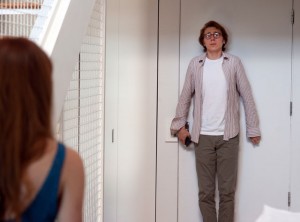
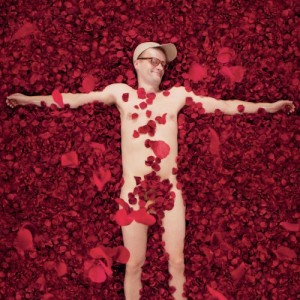
RUBY SPARKS

“As sophomoric as it may sound on paper, RUBY SPARKS clicks, with a script that embraces as much convention as it intends to buck.” – Norm Schrager, Meet In The Lobby 

“Hobbled by one of the least appealing lead performances of this or maybe any year and directed with tone-deaf inconsistency at every turn.” – Sean Burns, Philadelphia Weekly
 
“Just because the filmmakers wink at us through all this sub-Woody Allen bullshit doesn’t mean it isn’t sub-Woody Allen bullshit.” – Jake Mulligan, The Suffolk Voice


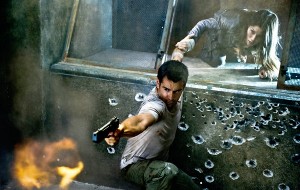
 TOTAL RECALL

“I didn’t hate the new TOTAL RECALL. But only because it’s way, way too forgettable to be worth the effort to hate. Call it extreme indifference, I guess.” – Bob Chipman, The Escapist

“I’d rather watch paint dry. At least then, when the process was finished, I’d be looking at something different than what I was looking at before.” – Greg Vellante, The Eagle Tribune

“One of the few, fortunate movies to do something interesting with an old favorite, preserving timeless tropes while addressing contemporary concerns.” – Kilian Melloy, Kal’s Movie Blog

“It takes the central conceit of the original film and saps away all the irony and bombast that made it endearing in the first place.” – Jake Mulligan, The Suffolk Voice

“TOTAL RECALL doesn’t forget its roots. It simply overwrites them with some new memories.” – Daniel M. Kimmel, NorthShoreMovies.net


EASY MONEY

“Tides of fear, rage, and greed sweep through the cast of characters, propelling them on disastrous collision courses.” – Kilian Melloy, EDGE Boston
 
“In this world, it’s not the blood on your hands that brings you down — it’s the stain on your cufflinks.” – Jake Mulligan, The Boston Phoenix


KLOWN
 
“Like HEART OF DARKNESS if it were built around semen humor, KLOWN gives us the kinkiest trip down a river since DELIVERANCE.” – Jake Mulligan, The Suffolk Voice
 
“Denmark’s answer to CURB YOUR ENTHUSIASM, with vestiges of Dogme 95.” – Brett Michel, The Boston Phoenix


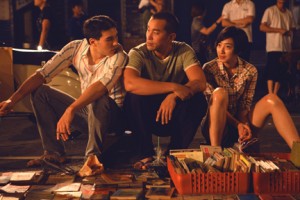
GIRLFRIEND BOYFRIEND
 
“Complicated but compelling, the film also struggles a bit with Yang’s erratic direction.” – Monica Castillo, The Boston Phoenix


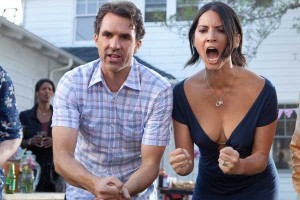
 THE BABYMAKERS
 

“A testosterone-fuelled view of infertility; meaning it’s all about sperm jokes, penis jokes, masturbation jokes and, when all that fails, getting hit in the crotch.” – John Black, Boston Event Guide

“I promise you, I’m not making this up: this is a movie someone paid to make, and assumed other people would pay to see. I’m at a loss.” – Jake Mulligan, EDGE Boston


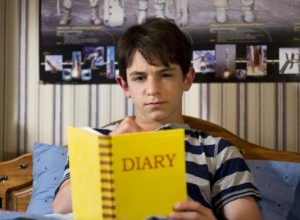
DIARY OF A WIMPY KID: DOG DAYS

“More like diary of a little asshole.” – Greg Vellante, The Eagle Tribune

“If you’re over the age of 12, chances are you’re already too old for these movies.” – Daniel M. Kimmel, NorthShoreMovies.net


AI WEIWEI: NEVER SORRY

“Some bio-docs let you feel as though you’ve lived the subject’s life. For better or worse, this one makes you feel like an eavesdropper.” – Jake Mulligan, EDGE Boston


BOFCA INTERVIEW: 8/2

If you watched MTV at all during the 1990’s, chances are you’re already very familiar with the work of Jonathan Dayton and Valerie Faris. This husband and wife team directed some seminal, constantly re-run videos for R.E.M., Soundgarden, Red Hot Chili Peppers, Smashing Pumpkins and even The Ramones. Dayton and Faris made the leap to features with 2006’s surprise smash LITTLE MISS SUNSHINE.

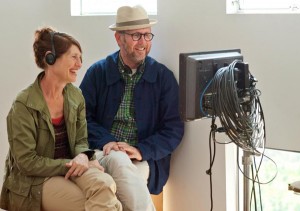
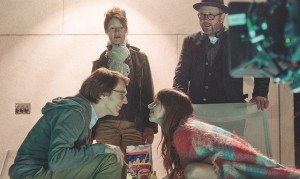
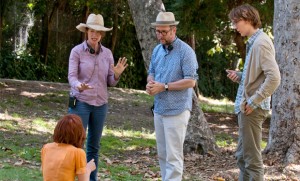
They’re back this week with RUBY SPARKS, an off-kilter romance about a writer who falls in love with his fictional creation. Dayton and Faris sat down last month with BOFCA’s Sean Burns.

Q: I was wondering about your approach to this movie, because it is based on such a literary conceit. How did you decide on a visual language to express that?

Valerie Faris: That’s a good question. We haven’t been asked that one yet! The first starting point was finding the house. We knew the house should be mostly white, because the script described his house as a blank page. We were looking for the typical L.A. 80’s house, which are all kind of white boxes on the hills. We wanted to create a space that felt maze-like, referencing M.C. Escher with stairs and multiple levels.

Jonathan Dayton: It was like the inside of Calvin’s head.

VF: A little lonely, a little cold and empty. We thought it would start very much like the blank page, and then Ruby would bring colors in as she got more involved with Calvin.

JD: Because it was such a fantastic premise, we wanted to treat it in a very matter-of-fact way. We didn’t want to use a documentary filming style but we did shoot most of it hand-held, so the camera is breathing and responsive. It’s not a formal frame where you have a locked-off camera.

VF: Especially in that house where there are so many right angles. It would get very sterile.

Q: It sounds like such a comedic premise, but the movie’s tone is much darker than I expected.

JD: That’s what was exciting to us. Like LITTLE MISS SUNSHINE, we felt there was a real interesting mix of humor and…

VF: And pain. There’s a lot of humor that comes from pain, which was definitely the case in LITTLE MISS SUNSHINE, and in this too. This struggle to try and get a relationship right, even though it is high-concept, the issues that are raised are very relatable.

JD: Also just getting the audience to accept this premise…

VF: And then forget about it. We never wanted to explain how she got there or make much of the magic in the film. The tone was the trickiest thing, how to keep it real at every turn. It’s funny because when you envision a film, the difference between what works on the page and what works when you’re shooting… and then in the edit when you see the whole thing altogether you realize how much you really need.

Q: There’s an old saying that a movie is written three times, on the page, in front of the camera and in the editing room.

VF: It really is. We spent every day in the editing room, and it really comes down to every frame. Now with the Avid you really can shift things – actors don’t like to hear this – but you can take dialogue from one scene and put it over picture from another. There’s a little bit of puppetry in editing.

JD: A little bit?

VF: Okay, a lot of it. So it’s incredible to have actors who trust you, and they let it go. That’s a really nice feeling and we had a great collaborative relationship with these guys.

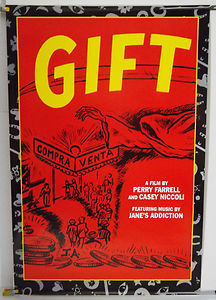
Q: So when I was a wet-behind-the-ears freshman back in film school, I went to see a picture you produced for Perry Farrell called GIFT.

JD: OH NO! Oh my God!

Q: I saw it at midnight at the Angelika and had no idea what the fuck was going on.

VF: Neither did I!  Yeah, that was the beginning of our relationship with Perry Farrell.

Q: I think it ended mine.

JD: HA! Well, we weren’t involved in shooting a lot of that. We shot all the concerts, but then they came to us with this pile of footage and said: “Help?”

VF: We worked with Perry and an editor and just tried to…

JD: There were some great elements to it. Perry’s mind is just… we’d be cutting and pasting graphics in the editing room and he’s saying: “I’m gonna do this little thing, I’m gonna call it Lollapalooza.” That’s been the pleasure of filmmaking all these years. You collaborate with amazing artists.

VF: I miss working with musicians. Nick, the composer on this film, has a band, and we’d worked with him on LITTLE MISS SUNSHINE. We really enjoyed making the score with him. It harkens back a little bit to working on music videos, and we miss that. You just got to work with some really great artists. It never felt so much like a business back then.

Q: So you’re not doing music videos anymore?

JD: We get asked all the time. But we had such a good time doing them in their heyday, they aren’t really a force now. They’re seen on the Internet, if you’re lucky. As nice as it is to be able to pull up a video any time you want to see it, it’s really fun to have them broadcast.

Q: I do miss sitting in front of MTV for hours wondering what was going to come up next.

JD: Exactly. 

VF: They were curated for you. I think MTV could be successful if they started showing videos again.

JD: But they make more money now with their shows.

VF: Yeah. Their crappy reality shows.

RUBY SPARKS opens Friday, August 3d at Boston Common and Kendall Square.


BOFCA REPERTORY PICK: 7/31

Is there any director from cinema’s past 50 years as influential as Sergio Leone?

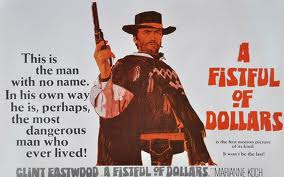
It’s impossible to even decide where to begin with the legacy he and his films have left behind. Of course, you could start with the incredibly prolific wave of 70’s Italian genre movies that followed in his wake; slasher films, cop films, supernatural thrillers, and the genre he godfathered – The Spaghetti Western. They are, almost without exception, derived from his wholly unique visual style. And his preference for ‘heroes’ who err on the side of violence and villainy.

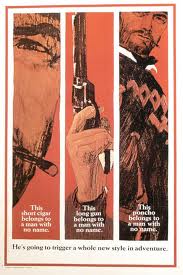
Then there is the sheer iconography of his greatest images – from the climactic duel in THE GOOD, THE BAD, AND THE UGLY and De Niro staring blankly into the end of ONCE UPON A TIME IN AMERICA, to his oft-used favorites like sweat-dripping close-ups crosscut with desolate long shots, or the use of the entire Cinemascope frame to photograph nothing more than a man’s eyes. This is to say nothing about the fact that he created one of cinema’s defining antiheroes (if not one of its first) in Clint Eastwood’s Man With No Name, a bounty killer who murdered without hesitation for money and spouted enough one-liners for us to like him while he did it.

We’ve seen a few of these characters since then.

And perhaps most importantly, there is the innumerable amount of modern filmmakers who count him among their influences – and none too subtly. And that list ranges from his spiritual son Quentin Tarantino to master filmmakers like Martin Scorsese to upstart youths like Edgar Wright (SHAUN OF THE DEAD.) So, to put it bluntly, imagining the landscape of modern film without the language and influence of Sergio Leone to guide it is a bit like trying to imagine what the NBA would be like without Michael Jordan.
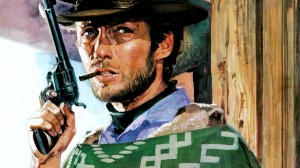
And with A FISTFUL OF DOLLARS, playing twice today at the Brattle Theatre, you get to see Leone become Leone, as we know him. Ennio Morricone’s musical compositions are as integral to his style as any of his visual flourishes, and the pairing of his music against Leone’s ruthlessly violent images – like Clint Eastwood’s boot stomping into the picture, framed as large as his enemies entire bodies, ready to do battle – is like cinematic love at first sight.

And while opening scenes feel a bit craftsman-like (Leone had worked behind the camera on sword-and-sandals epics) by the film’s climax, his eye has matured enough to capture the shockingly powerful frames of conflict and contrast that have captivated viewers so vehemently for decades.

So let’s get the elephant out of the room. Yes, FISTFUL is a direct remake of Akira Kurosawa’s samurai masterpiece YOJIMBO, yes, much of it is recreated shot-for-shot, and yes, YOJIMBO is probably the better film if you deconstruct the two. And certainly, everything Leone is doing is taken from the playbook of American westerns – say, the Catholic iconography and stark battles between good and evil from Ford, and the slightly-surreal framing from Samuel Fuller’s Cinemascope masterpiece FORTY GUNS (which does, indeed, pioneer the eyeballs-close-up Sergio is always granted credit for.)

But Leone makes the movie his own, his signature is undeniable – and it’s those changes and images that would come to define the artist as we know him.

The sense of self-awareness that penetrates throughout all the operatic posturing, making every single second a joy to watch. The sense of deconstructing his chosen genre, the western, then building it back up with nothing more than it’s most essential moments – a hero emerges, a villain conquers, a gunfight – stretched out to unbearably tense lengths. And those beautiful, magnificent zooms – everything that we now know as simply Leone is present here. So, behind the “it’s a remake!” complaints is one of the greatest instances of a filmmaker finding the precise voice he would use to tell stories for the rest of his career.

Like Kubrick with 2001 or Godard with BREATHLESS, it lays out the aesthetic style (both in his visuals and in Morricone’s singular sounds) and thematic concerns that would drive him for the rest of his life with a startling clarity. It’s not just a movie, it’s an artistic mission statement. – Jake Mulligan

A FISTFUL OF DOLLARS screens today, 7/31, at 4:30PM and 9:30PM. THE STORY OF FILM, PARTS 7 + 8, play at 7:00PM. The Brattle Theatre, 40 Brattle Street, Cambridge MA. 02138.