BOFCA INTERVIEW: 8/2

If you watched MTV at all during the 1990’s, chances are you’re already very familiar with the work of Jonathan Dayton and Valerie Faris. This husband and wife team directed some seminal, constantly re-run videos for R.E.M., Soundgarden, Red Hot Chili Peppers, Smashing Pumpkins and even The Ramones. Dayton and Faris made the leap to features with 2006’s surprise smash LITTLE MISS SUNSHINE.

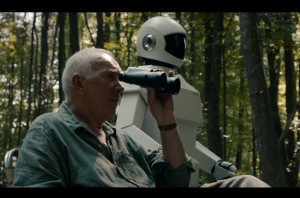
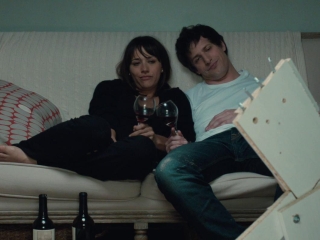
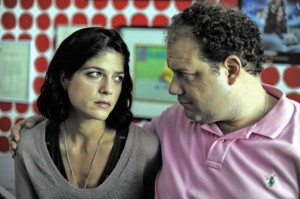
They’re back this week with RUBY SPARKS, an off-kilter romance about a writer who falls in love with his fictional creation. Dayton and Faris sat down last month with BOFCA’s Sean Burns.

Q: I was wondering about your approach to this movie, because it is based on such a literary conceit. How did you decide on a visual language to express that?

Valerie Faris: That’s a good question. We haven’t been asked that one yet! The first starting point was finding the house. We knew the house should be mostly white, because the script described his house as a blank page. We were looking for the typical L.A. 80’s house, which are all kind of white boxes on the hills. We wanted to create a space that felt maze-like, referencing M.C. Escher with stairs and multiple levels.

Jonathan Dayton: It was like the inside of Calvin’s head.

VF: A little lonely, a little cold and empty. We thought it would start very much like the blank page, and then Ruby would bring colors in as she got more involved with Calvin.

JD: Because it was such a fantastic premise, we wanted to treat it in a very matter-of-fact way. We didn’t want to use a documentary filming style but we did shoot most of it hand-held, so the camera is breathing and responsive. It’s not a formal frame where you have a locked-off camera.

VF: Especially in that house where there are so many right angles. It would get very sterile.

Q: It sounds like such a comedic premise, but the movie’s tone is much darker than I expected.

JD: That’s what was exciting to us. Like LITTLE MISS SUNSHINE, we felt there was a real interesting mix of humor and…

VF: And pain. There’s a lot of humor that comes from pain, which was definitely the case in LITTLE MISS SUNSHINE, and in this too. This struggle to try and get a relationship right, even though it is high-concept, the issues that are raised are very relatable.

JD: Also just getting the audience to accept this premise…

VF: And then forget about it. We never wanted to explain how she got there or make much of the magic in the film. The tone was the trickiest thing, how to keep it real at every turn. It’s funny because when you envision a film, the difference between what works on the page and what works when you’re shooting… and then in the edit when you see the whole thing altogether you realize how much you really need.

Q: There’s an old saying that a movie is written three times, on the page, in front of the camera and in the editing room.

VF: It really is. We spent every day in the editing room, and it really comes down to every frame. Now with the Avid you really can shift things – actors don’t like to hear this – but you can take dialogue from one scene and put it over picture from another. There’s a little bit of puppetry in editing.

JD: A little bit?

VF: Okay, a lot of it. So it’s incredible to have actors who trust you, and they let it go. That’s a really nice feeling and we had a great collaborative relationship with these guys.

Q: So when I was a wet-behind-the-ears freshman back in film school, I went to see a picture you produced for Perry Farrell called GIFT.

JD: OH NO! Oh my God!

Q: I saw it at midnight at the Angelika and had no idea what the fuck was going on.

VF: Neither did I!  Yeah, that was the beginning of our relationship with Perry Farrell.

Q: I think it ended mine.

JD: HA! Well, we weren’t involved in shooting a lot of that. We shot all the concerts, but then they came to us with this pile of footage and said: “Help?”

VF: We worked with Perry and an editor and just tried to…

JD: There were some great elements to it. Perry’s mind is just… we’d be cutting and pasting graphics in the editing room and he’s saying: “I’m gonna do this little thing, I’m gonna call it Lollapalooza.” That’s been the pleasure of filmmaking all these years. You collaborate with amazing artists.

VF: I miss working with musicians. Nick, the composer on this film, has a band, and we’d worked with him on LITTLE MISS SUNSHINE. We really enjoyed making the score with him. It harkens back a little bit to working on music videos, and we miss that. You just got to work with some really great artists. It never felt so much like a business back then.

Q: So you’re not doing music videos anymore?

JD: We get asked all the time. But we had such a good time doing them in their heyday, they aren’t really a force now. They’re seen on the Internet, if you’re lucky. As nice as it is to be able to pull up a video any time you want to see it, it’s really fun to have them broadcast.

Q: I do miss sitting in front of MTV for hours wondering what was going to come up next.

JD: Exactly. 

VF: They were curated for you. I think MTV could be successful if they started showing videos again.

JD: But they make more money now with their shows.

VF: Yeah. Their crappy reality shows.

RUBY SPARKS opens Friday, August 3d at Boston Common and Kendall Square.


BOFCA REPERTORY PICK: 7/31

Is there any director from cinema’s past 50 years as influential as Sergio Leone?

It’s impossible to even decide where to begin with the legacy he and his films have left behind. Of course, you could start with the incredibly prolific wave of 70’s Italian genre movies that followed in his wake; slasher films, cop films, supernatural thrillers, and the genre he godfathered – The Spaghetti Western. They are, almost without exception, derived from his wholly unique visual style. And his preference for ‘heroes’ who err on the side of violence and villainy.

Then there is the sheer iconography of his greatest images – from the climactic duel in THE GOOD, THE BAD, AND THE UGLY and De Niro staring blankly into the end of ONCE UPON A TIME IN AMERICA, to his oft-used favorites like sweat-dripping close-ups crosscut with desolate long shots, or the use of the entire Cinemascope frame to photograph nothing more than a man’s eyes. This is to say nothing about the fact that he created one of cinema’s defining antiheroes (if not one of its first) in Clint Eastwood’s Man With No Name, a bounty killer who murdered without hesitation for money and spouted enough one-liners for us to like him while he did it.

We’ve seen a few of these characters since then.

And perhaps most importantly, there is the innumerable amount of modern filmmakers who count him among their influences – and none too subtly. And that list ranges from his spiritual son Quentin Tarantino to master filmmakers like Martin Scorsese to upstart youths like Edgar Wright (SHAUN OF THE DEAD.) So, to put it bluntly, imagining the landscape of modern film without the language and influence of Sergio Leone to guide it is a bit like trying to imagine what the NBA would be like without Michael Jordan.

And with A FISTFUL OF DOLLARS, playing twice today at the Brattle Theatre, you get to see Leone become Leone, as we know him. Ennio Morricone’s musical compositions are as integral to his style as any of his visual flourishes, and the pairing of his music against Leone’s ruthlessly violent images – like Clint Eastwood’s boot stomping into the picture, framed as large as his enemies entire bodies, ready to do battle – is like cinematic love at first sight.

And while opening scenes feel a bit craftsman-like (Leone had worked behind the camera on sword-and-sandals epics) by the film’s climax, his eye has matured enough to capture the shockingly powerful frames of conflict and contrast that have captivated viewers so vehemently for decades.

So let’s get the elephant out of the room. Yes, FISTFUL is a direct remake of Akira Kurosawa’s samurai masterpiece YOJIMBO, yes, much of it is recreated shot-for-shot, and yes, YOJIMBO is probably the better film if you deconstruct the two. And certainly, everything Leone is doing is taken from the playbook of American westerns – say, the Catholic iconography and stark battles between good and evil from Ford, and the slightly-surreal framing from Samuel Fuller’s Cinemascope masterpiece FORTY GUNS (which does, indeed, pioneer the eyeballs-close-up Sergio is always granted credit for.)

But Leone makes the movie his own, his signature is undeniable – and it’s those changes and images that would come to define the artist as we know him.

The sense of self-awareness that penetrates throughout all the operatic posturing, making every single second a joy to watch. The sense of deconstructing his chosen genre, the western, then building it back up with nothing more than it’s most essential moments – a hero emerges, a villain conquers, a gunfight – stretched out to unbearably tense lengths. And those beautiful, magnificent zooms – everything that we now know as simply Leone is present here. So, behind the “it’s a remake!” complaints is one of the greatest instances of a filmmaker finding the precise voice he would use to tell stories for the rest of his career.

Like Kubrick with 2001 or Godard with BREATHLESS, it lays out the aesthetic style (both in his visuals and in Morricone’s singular sounds) and thematic concerns that would drive him for the rest of his life with a startling clarity. It’s not just a movie, it’s an artistic mission statement. – Jake Mulligan

A FISTFUL OF DOLLARS screens today, 7/31, at 4:30PM and 9:30PM. THE STORY OF FILM, PARTS 7 + 8, play at 7:00PM. The Brattle Theatre, 40 Brattle Street, Cambridge MA. 02138.


BOFCA REVIEW ROUNDUP: 7/27

THE QUEEN OF VERSAILLES

“The recession writ extra-large in gigantic gaudy letters, director Lauren Greenfield’s documentary transcends its Bravo TV-show trappings to become something rather telling, and weirdly empathetic.” – Sean Burns, Philadelphia Weekly

“Distinctly American in ways many of us would likely rather not admit, not least because Greenfield truly seems to have some reverence for their broken, oversized dreams.” – Jake Mulligan, EDGE Boston


THE WATCH

Unforunately, THE WATCH takes four genuinely funny comedic actors and gives them nothing of substance to work with. In turn, it gives the audience nothing worth watching.” – Tim Estiloz, Boston Movie Examiner

“Congratulations, MEN IN BLACK III. You are no longer the least entertaining comedy about aliens that I have seen this summer.” – Bob Chipman, The Escapist

“How the hell did this much talent produce something so middling? It simply feels like smaller bits and pieces from funnier movies, thrown together without any attempt at a cohesive structure or a controlled pace.” – Jake Mulligan, EDGE Boston

“If you’re curious how well the moron comedy and the alien invasion film work together let’s put it like this: as well as chocolate syrup goes with sushi.” – Daniel M. Kimmel, The Sci-Fi Movie Page

“The film’s general effect is one of mild, harmless entertainment, but by the same token this is also a movie you’ll forget you saw within a matter of hours.” – Kilian Melloy, Kal’s Movie Blog

“The word ‘crude’ comes to mind, as both a description of the humor and the quality of the writing.” – Evan Crean, Starpulse


STEP UP REVOLUTION

“The dancing’s there, but frustrated sighs and Kristen Stewart-esque eyes will only get you so much emotion.” – Monica Castillo, DigBoston

“It’s mind-numbingly stupid. But it’s also energetic, youthful, and most of all visually exhilarating.” – Jake Mulligan, The Sufflolk Voice

“There’s a lame plot stringing together a lot of energetic dance numbers. There’s nothing wrong with that. The classic MGM musicals were much the same, although the dialogue was a bit sharper.” – Daniel M. Kimmel, NorthShoreMovies.net


SACRIFICE

“Kaige does a masterful job of pacing the story, weaving together the formative moments of the young man’s life to create a compelling and thoroughly entertaining cinematic experience.
 – John Black, Boston Event Guide 

“The two hours crawl by, hanging on a series of exposition-heavy conference scenes, and it’s hard to stay emotionally invested in a plot so twist-heavy.” – Jake Mulligan, The Boston Phoenix


HARA-KIRI: DEATH OF A SAMURAI

“By sticking to conventions and never subverting the formula, Miike shows off his versatility in yet another way. And when his craft is this studied and strong, it’s hard to begrudge him going classical.” – Jake Mulligan, The Suffolk Voice


BOFCA REVIEW ROUNDUP: 7/20

THE DARK KNIGHT RISES

“It goes bigger. It goes bolder. It even goes broader – with what I think might be director Christopher Nolan’s interpretation of what we humans call ‘comedy.’ And yet something about it just doesn’t work.” – Bob Chipman, The Escapist

“Maybe the biggest movie I have ever seen. Not the best, mind you – just the largest, most sprawling, and most comically ambitious. By the time the fifth or sixth act rolled around I learned to stop worrying and love the hugeness.” – Sean Burns, Philadelphia Weekly

“Hathaway is a delight and wonderfully redeems the big-screen portrayal of Catwoman; washing away Halle Berry’s ineptly asinine take on the character from our collective nightmares.” – Tim Estiloz, Boston Movie Examiner

“In its grandiose design and large-scale aspirations, this movie reaches levels not often reached in the superhero genre.  When it finished, I felt like the wind had been knocked out of me.”  – Greg Vellante, The Eagle Tribune

“You had to expect that Christoper Nolan would throw everything he’s got into the final chapter of his bar-setting Batman series. It’s a huge, mixed bag of Nolan-sized ambition, working both for and against the film.” – Norm Schrager, Meet In The Lobby

“This is exciting, dramatic and intelligent filmmaking. Nolan’s Batman trilogy represents the high water mark for costumed hero sagas and one not likely to be matched anytime soon.” – Daniel M. Kimmel, NorthShoreMovies.net

“Nolan, who co-wrote the script with his brother Jonathan, tries to coat the film in a slick sheen of ‘bigger meaning,’ but none of the themes are really fully developed beyond the footnote stage.” – John Black, Boston Event Guide

“It’s as if Nolan has held up a mirror and left enough in the text for either side to interpret it their way, rather than make a more pointed political statement. For such a broad work of pop-art, it’s the perfect approach.” – Jake Mulligan, The Suffolk Voice

“Do you think that Nolan, in his re-envisioning of the Batman universe, has maybe become a little condescending towards it? Does he think that he’s better than the source material?” – Steve Head, The Post-Movie Podcast

“His story gets diluted by focusing on so many characters at once. Batman himself almost seems to take a backseat in his own movie.” – Evan Crean, Reel Recon


THE DAY HE ARRIVES

“Hong Sang-soo may be copying a template from his earlier movies about flailing directors, but each film is unique, punctuated by occasional zooms that underline the randomness of existence.” – Brett Michel, The Boston Phoenix


BOFCA REVIEW ROUNDUP: 7/13

ICE AGE: CONTINENTAL DRIFT

“It’s still funny, but you’ve seen it all before.” – Brett Michel, The Boston Phoenix
 
“For a series about extinction, this franchise feels like it’s been going on forever.” – Jake Mulligan, EDGE Boston
 
“Like the other two sequels, CONTINENTAL DRIFT isn’t a bad movie at all. It’s just kinda superfluous. “ – Bob Chipman, The Escapist
 
“The problem is that there’s little in the way of wit to engage the adults.” – Daniel M. Kimmel, Northshoremovies.net


KATY PERRY: PART OF ME
 
“Perry presents herself as a curiously asexual sex object, sorta like Strawberry Shortcake in hot-pants with sparkly pinwheels on her boobs.” – Sean Burns, Philadelphia Weekly
 
 
“An unexpectedly more nuanced concert film that depicts Katy Perry with more depth and personality than one might expect from a film of this nature.” – Tim Estiloz, Boston Movie Examiner
 
 
NEIL YOUNG JOURNEYS
 
“Demme’s always trying to get as close as he can to where the music is being made, but here he might have outdone himself and finally gotten a bit too close.” – Sean Burns, Philadelphia Weekly