BOFCA REPERTORY PICK: 7/9

Following last week’s screening of Chaplin’s THE GOLD RUSH, the Brattle Theatre is screening Buster Keaton’s SHERLOCK JR. tonight and tomorrow as part of its repertory series based on the documentary, THE STORY OF FILM.

sherlock jr

As half of a double feature that covers the birth of cinema, SHERLOCK JR. is remarkably sophisticated. Clocking in at under an hour, our hero Keaton solves a mystery, falls into a movie, and must win back the hand of his love interest all before a fade to black. Its breakneck pace was standard for the era of short comedy features and one-reelers (around 20 minute shorts). The following year, Chaplin would release THE GOLD RUSH with a decadent 90 minutes in run time. However there’s no time for lulls in SHERLOCK JR., positioned from the start with jokes ready to set off a chain of events. Not a word is spoken (it’s a silent comedy), but it’s perfect this way. The audience gets to fill in what’s going on by context clues with the help of intertitles. It’s our own little mystery as a modern audiences unused to watching movies without dialogue.

But Keaton is a different comedic craftsman than Chaplin. He never smiles. His listless expressions are up to the viewer to interpret. Chaplin overacts: he cries, he laughs, he flirts, and there is no confusion or subtly about it. Both were meticulous about the gags in their films. Chaplin would often fashion ordinary items into different devices, but Keaton would construct elaborate mechanical gags with camera tricks. He does this in SHERLOCK JR. when he falls into the silver screen and into the throws of a movie, an action-packed mystery. It’s akin to a reverse on the plot of Woody Allen’s PURPLE ROSE OF CAIRO, and Keaton’s reality becomes that of the movies. Not to ruin the scene-changing gag, but remember that this was 1924 and the only tools Keaton had at his disposal were surveyor’s tools and scissors for editing by hand. The scene’s flawless appearance gives the impression that he does all the traveling in the movie within the movie. The movement from location to location doesn’t waver, which is even more impressive when you realize that  cameras were also hand-cranked at the time.

SHERLOCK JR. is a personal favorite of mine, and not just because the main character gets to fall into the world of movie magic. It’s charming as an antique piece (movie tickets at $.40!) and as a comedy. Much of the struggle Keaton experiences, like losing out to a competitor, is relatable. Most of us might not be as rich or powerful as the next guy over, but we are who we are. There’s something American about rooting for the underdog, even if it’s just to see him smile. -Monica Castillo

SHERLOCK JR screens tonight and tomorrow, 7/9 -7/10, at 5:30 PM and 9:15 PM. The Brattle Theatre, 40 Brattle Street, Cambridge MA. 02138

BOFCA INTERVIEW: 7/5

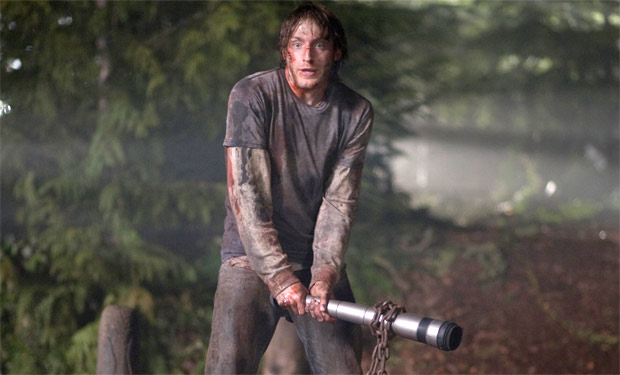
Drew Goddard at SXSW 2012. Photo by Monica Castillo

Co-writer and director Drew Goddard’s THE CABIN IN THE WOODS returns for late shows July 5th through 8th at the Brattle Theatre. Last March, BOFCA’s Monica Castillo sat down with Goddard at the SXSW Film Festival. As a TV screenwriter, his name can be found in long-running series like BUFFY THE VAMPIRE SLAYER, ANGEL, ALIAS, and LOST. Goddard made the leap to the big screen with a script for CLOVERFIELD before teaming up with BUFFY creator Joss Whedon for a thoughtfully spooky film that became THE CABIN IN THE WOODS.

Q: So CABIN was on the shelf for a while, wasn’t it?

A: Yeah, well, we were at a studio that went bankrupt. We got delayed a bit, but so did the last James Bond film, THE HOBBIT. But we’re out now!

Q: How did you come up with a horror story that weaved together pop culture and mythology?

A: We just love horror movies, so we started to explore why we loved horror so much. It started to suggest bigger things. Why do we like watch kids getting butchered on-screen? What is it that we enjoy about being scared? It just made us look beyond the horror movie and at the people we are. This sort of sacrificing of youth — that’s been happening forever and that bears a lot in the movie too. We have to go to the mythology because so many of our stories are based off of that. Those roots are very much a part of the horror genre.

Q: How about the basic idea of a house of horrors that other people controlled?

A: You know, it wasn’t a lot more complicated than, “You know what would be cool? This…” Joss had this original idea of people upstairs and people downstairs, and we just pitched that and said let’s explore this. That was fun to see where the story would take us. We didn’t do anything more than to set out to write a movie.

Q: What would you say were some of the horror movies that influenced you?

A: I didn’t try to get any one influence. I wanted to give the film a very elegant look to counteract the ridiculousness that happens. I wanted it to feel grown-up. I wanted to balance the mundane and the simple with the operatic.

Q: So this wasn’t your quick and dirty B-movie?

A: We shot for a while actually, about 40 days. It was some hard months in Vancouver, with a lot of rain and a lot of snow. It was not hard for the actors to look distressed.

Q: How did it feel to work with a cast of young, fresh actors and older, more experienced ones?

A: It definitely felt like I got to shoot two different movies. It was a totally different vibe. What was interesting is that the veteran actors were much more fun than the kids. The kids were way more serious. I think that comes with experience, they know how to let their hair down a little better. But I didn’t expect that.

Q: How was it collaborating with Whedon again?

A: We just got along right away. I love his writing, he’s my favorite writer in the world.

Q: With quite the cult following.

A: Oh my God, I was a part of that. I think that our voices are very similar. It’s very easy for us to write together because we just like each other. We had so much fun writing BUFFY and ANGEL; it felt like the next thing to do was to do when the shows had gotten out. Let’s write a movie. Let’s try to write something fun and fast. We had this original idea and we decided to write it for ourselves. Just a movie we’d like to see. We’ll figure out if anyone would let us make it later.

THE CABIN IN THE WOODS shows Thursday, July 5th through Sunday, July 8th at 9:30 PM. The Brattle Theatre, 40 Brattle Street, Cambridge MA 02138


BOFCA REPERTORY PICK: 6/27

It always surprises me when I can get away with making a Chaplin reference to friends or when I see them dressed as his Tramp character for Halloween. More often than not, my friends haven’t seen his films, but they know of him- the mustache, his duck walk, complete with bamboo cane and bowler hat. I’m lucky if any of them (outside of the film buff bubble) have seen him in any of his short films either.

If you fall into the category of “never seen a Chaplin film,” then consider tonight your night to trek out to the Brattle Theatre and catch one of his best.

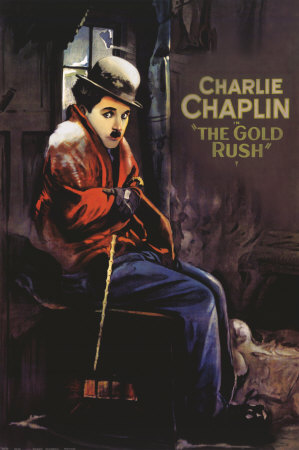
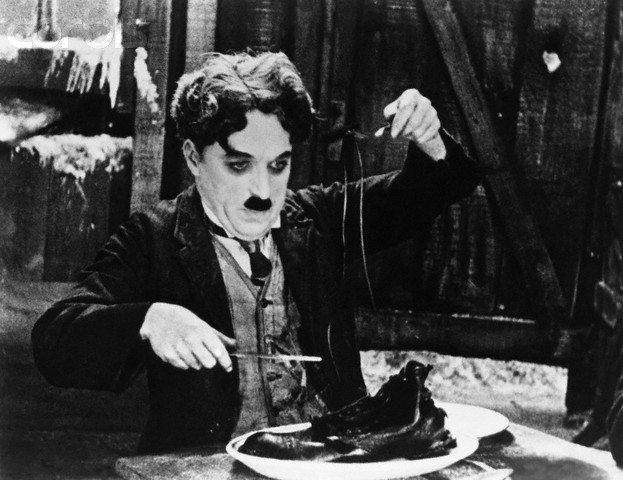
THE GOLD RUSH follows Chaplin’s iconic Tramp character to the heyday of the Klondike Gold Rush. He’ll find competitive prospectors and perhaps a love interest, but first the Tramp will have to survive the treacherous snow storms and hunger pains in order to strike gold. It paints a pretty bleak picture of this chapter in our nation’s history, but in true Chaplin style, he takes in suffering with plenty of humor.

We don’t weep for him in THE GOLD RUSH in the same way we might for the THE KID or THE CIRCUS. Neither does this love story feel as deep as the ones in CITY LIGHTS or MODERN TIMES. And the political messages often seen in various other films are not as apparent in THE GOLD RUSH. The government is mostly absent in the frozen wilderness, so the strife the Tramp runs into comes mostly from the weather and the tough crowd that set up the mining town.

Chaplin’s creative gags set this film apart from others in his canon. Although a few of the jokes have not aged as well (for example, the chicken suit dream sequence), there are several memorable ones that can be found in recent movies. For instance, the famous dancing bread sequence Chaplin does at a dinner party to entertain his guests was redone by Johnny Depp for the movie BENNY AND JOON and by Amy Adams in last year’s THE MUPPETS.

Chaplin stuck gold with THE GOLD RUSH: it became the highest grossing comedy of the silent era. He claimed it as the film he wanted to be most remembered for. It’s a movie that for many people may seem oddly familiar: its images have been reprinted in movie and history books for decades. But for the chance to see it newly restored on the big screen? To me, that’s well worth the rush. – Monica Castillo

THE GOLD RUSH screens tonight, 6/27, at 8:00 PM. The Brattle Theatre, 40 Brattle Street, Cambridge MA. 02138
BOFCA REPERTORY PICK: 6/19

Whether it be a student with an essay assignment, a screenwriter, an author, or a film critic trying to throw together 500 words by deadline on the latest summer dud—writer’s block is a familiar sensation for most of us. Some of us pace. Some of us procrastinate. Some of us sit in front of our computers or typewriters and rip our hair out from the roots.
 
Charlie Kaufman did all of this. And then, he made a movie about it.
 
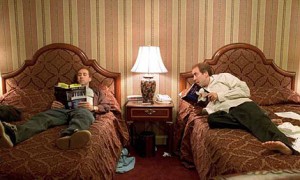
ADAPTATION, which plays tonight at the Brattle as part of their phenomenal ‘Nicolas Cage: Greatest American Actor’ repertory series, is an ingenious film that stirs, teases, and explores the elements of creative development and human candidness via Kaufman boldly/neurotically placing himself into what began as an adaptation of Susan Orlean’s novel, “The Orchid Thief.”
 
This was back in the early-to-mid 90s, back when Kaufman was tapped to adapt the novel with Jonathan Demme on board to direct. But as Kaufman spiraled into a serious case of writer’s block, he found “The Orchid Thief” impossible to turn into an adapted narrative screenplay.
 
So he eventually wrote a film about his troubles. ADAPTATION has a grand, immersive quality to it, filled with actual quirkiness (before JUNO came around and ruined that word for everyone). Getting lost in these characters’ minds is something that Kaufman masters effortlessly in his script, and director Spike Jonze brings this scrutiny to the screen with an absolute craft for visual emotion.
 
And it all comes to life through a collection of brilliant performances—topped, of course, by Cage, who offers two performances for the price of one ticket with this particular film.
Playing both Kaufman and Kaufman’s fictional twin brother Donald, Nicholas Cage has the ability to bounce back and forth with Nicholas Cage while also lending individual gravities to each of these characters—with all their respective idiosyncrasies and psychological hiccups. It is arguably one of the best performances of his career.
 
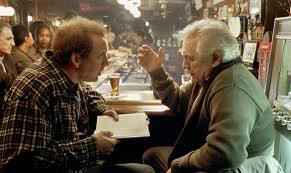
The character of Donald, I suspect, is mainly a personification of everything Charlie Kaufman loathes about formula, Hollywood screenwriting. Charlie is shown in the movie speaking into tape recorders and fixatedly pacing around his room, while Donald attends screenwriting seminars held by Robert McKee (played by Brian Cox) and gets signed for his spec script for a hackneyed psychological thriller called “THE 3”
 
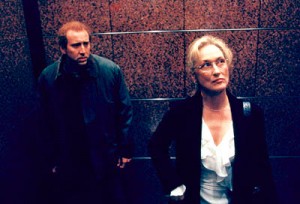
Kaufman throws these countless fictional plot points in with true stories and real characters. Donald isn’t real, but “The Orchid Thief” author Susan Orlean is—played here in a great performance by Meryl Streep. Kaufman layers his own troubles with adaptation and mirrors it with a fictional subplot involving Orlean’s relationship with John Laroche, the subject of her book and a character played with infectious tenacity by Chris Cooper.
 
Adaptation, relationships, the creative process but more importantly the human process—Kaufman has mastered the emotional and intellectual properties of his little meta-fueled mind to craft a truly individual screenplay with ADAPTATION which he humorously submitted officially as being penned by himself and his fictional brother.
 
Needless to say, ADAPTATION just might be the most daring, entertaining, and cerebrally unmatched thing to ever result from a case of writer’s block. – Greg Vellante and Donald Vellante
 
ADAPTATION screens tonight, 6/19, at 4:30, 7:00 and 9:30 PM. The Brattle Theatre, 40 Brattle Street, Cambridge MA. 02138


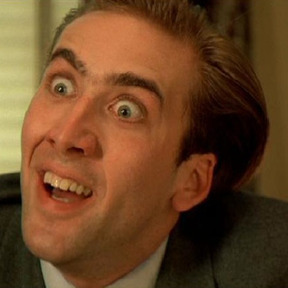
BOFCA REPERTORY PICK: 6/13

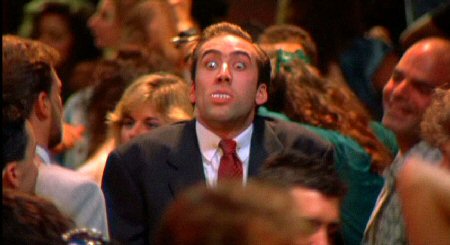
The Brattle’s ‘Nicolas Cage: Greatest American Actor’ series is a great opportunity for audiences to re-assess the wrongly reviled performer, and to see him as what he truly is: a man daring enough to separate acting and realism. His over-the-top performances, so often dismissed as camp, feel more like an actor trying to achieve an unforeseen future of acting – one where emotional honesty and expressionism is key, and reality means nothing. His performances skew abstract and absurdist in a culture where everything, even superheroes, need to be gritty. And never before has Cage been as absurd as in his masterpiece of unrestrained “mega-acting,” VAMPIRE’S KISS.

Most of the films in the Brattle’s series see Cage as filtered through the mind of great auteurs. RAISING ARIZONA sees him reborn in the eyes of the insane Coen Brothers, who split the difference between philosophical inquiry and Looney Tunes lunacy in their character. FACE/OFF sees him playing a classic John Woo bad guy, diving in all directions with two handguns cocked and loaded. WILD AT HEART strands him in a Lynchian nightmare of sex, violence, and Americana. But VAMPIRE’S (which was forever immortalized by its inclusion in the ‘Nicolas Cage Losing His Shit’ viral video) sees Cage let loose in a way he never has before. Swinging madly from accent-to-accent, he allows no boundaries of character or reality to limit the depraved insanity of his performance as Peter Loew, a womanizing yuppie whose misogyny starts to externalize itself in bloodsucking ways. And director Robert Bierman seems delighted with the choice; allowing his mainly static frames to merely sit in awe of Cage’s alien presence.

But the great mistake audiences made is in assuming this is a sub-TROLL 2 work of so-bad-it’s-good camp. But the truth is that this tale of false masculinity and creeping insanity is closer to AGUIRRE, WRATH OF GOD than to MYSTERY SCIENCE THEATER. It follows Cage down the rabbit-hole of self loathing, at first creating a psychological link between his bedtime troubles and a bat-bite, then following that conceit until Cage is slogging through clubs, trying to pick up women with plastic fangs enshrouded in his teeth. It’s a slow descent into madness, and Bierman follows through with a masters dedication: he allows both Cage’s hallucinations and his mental illness to follow through to their most extreme endgames, until he’s wondering around the street begging bystanders to stake him the death (all the while, he imagines that his romantic savior is just around the corner.)

Many have compared this film and its themes to AMERICAN PSYCHO, but that film has nothing on Cage’s one-of-a-kind take on the psychologically demolished yuppie character. Yes, he’s awash in false gravitas and retarded sexuality, but the film is about so much more than just the sleaziness of the playboy lifestyle. I’m not being facetious with the AGUIRRE comparison: Bierman’s willingness to watch Cage’s confidence and demeanor slowly unravel itself to the point of self-destruction is downright Herzogian, and Cage’s hunchback limps and pained howls evoke the one of the cinema’s greatest madmen, Klaus Kinski. In fact, I almost wish this had been double featured with BAD LIEUTENANT – VAMPIRE’S KISS feels like a lost hallucinatory comedy Herzog made twenty years prior. – Jake Mulligan

VAMPIRE’S KISS plays tonight, 6/13, at 5:15, 7:30, and 9:45. The Brattle Theatre, 40 Brattle Street, Cambridge MA, 02138.